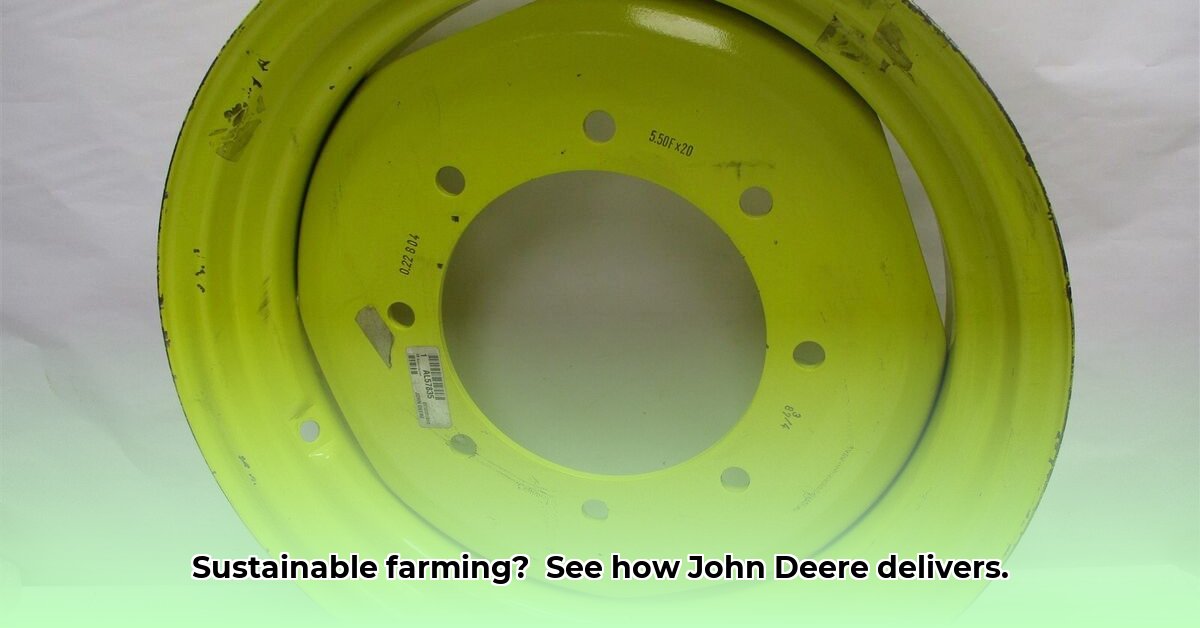
John Deere tractor wheel rims are crucial for efficient agriculture, but their environmental impact is a growing concern. This article analyzes the sustainability challenges within this market and proposes actionable solutions for a more environmentally responsible future. For additional information on John Deere equipment, check out this helpful resource: John Deere Info.
Market Overview: A Significant and Growing Demand
The market for John Deere tractor rims, encompassing both original equipment and aftermarket replacements, is substantial and consistently expanding. Farmers rely on robust, durable wheels for consistent operational efficiency. This ongoing demand presents a significant opportunity to integrate sustainable practices throughout the entire lifecycle of these components. Key players include John Deere itself and various aftermarket parts suppliers who cater to the considerable replacement market. However, meeting this demand sustainably requires a comprehensive approach beyond simply fulfilling orders.
Sustainability Challenges: The Hidden Environmental Costs
The production and disposal of tractor wheel rims and tires carry substantial environmental consequences, frequently overlooked. The manufacturing processes for steel and rubber, the primary constituent materials, are energy-intensive and contribute significantly to greenhouse gas emissions. Furthermore, the disposal of worn-out tires presents a considerable waste management challenge, with improper disposal leading to landfill overflow and associated environmental pollution. The transportation of these heavy components adds to the overall carbon footprint, further emphasizing the need for sustainable solutions.
Sustainable Solutions: Innovations for a Greener Future
Several strategies can significantly enhance the sustainability of the John Deere tractor wheel rim market without compromising durability or performance.
1. Eco-Friendly Materials: Innovations in Material Science
The development and adoption of sustainable materials offer a promising path toward reduced environmental impact. Recycled rubber, sustainable steel production methods, and bio-based polymers present viable alternatives to traditional materials, reducing reliance on virgin resources and minimizing associated environmental damage.
2. Circular Economy Models: Closing the Loop
Recycling and remanufacturing of tractor wheel rims and tires are essential for creating a closed-loop system. This approach minimizes landfill waste, reducing the demand for virgin materials. Remanufacturing initiatives offer potential for both cost savings and environmental benefits, leading to a more efficient allocation of resources. This model contributes to establishing a sustainable circular economy.
3. Optimized Logistics: Reducing Transportation Emissions
Efficient transportation plays a key role in minimizing the carbon footprint. Strategies such as regional sourcing of materials, reducing transportation distances, and the utilization of fuel-efficient modes of transport, can all contribute towards mitigating emissions associated with the distribution of rims and tires.
4. Precision Agriculture Technologies: Enhanced Tire Lifespan
Modern precision agriculture technologies offer opportunities to extend tire longevity. Data-driven practices, including optimized tire pressure management and precise application of fertilizers and pesticides, lessen soil compaction, thereby improving tire lifespan and reducing the frequency of replacements, mitigating the overall environmental impact.
Stakeholder Perspectives: Collaborative Action for Sustainability
All stakeholders—John Deere, aftermarket suppliers, farmers, and government regulators—bear responsibility for fostering sustainable practices within this market.
- John Deere: The company can lead by conducting Life Cycle Assessments (LCAs) of its products and by investing in research and development of sustainable materials and manufacturing processes.
- Aftermarket Suppliers: These companies should prioritize the sourcing of recycled materials and adopt optimized logistics strategies.
- Farmers: Farmers can contribute by adopting proper maintenance practices, embracing precision agriculture technologies, and making informed choices about tire disposal.
- Government Regulators: Governments can establish incentives and regulations to promote sustainable practices and support research and development in this area.
Actionable Recommendations: A Roadmap to Sustainability
The following recommendations offer a structured approach to achieving sustainability within the John Deere tractor wheel rim market:
- Conduct Life Cycle Assessments (LCAs) on all products to identify environmental hotspots. This data-driven approach allows for targeted improvements.
- Invest heavily in research and development of sustainable materials, such as recycled rubber and bio-based polymers. This can create a competitive edge whilst boosting sustainability.
- Implement robust recycling and remanufacturing programs for tractor tires and rims. Closing the loop is essential for minimizing waste and environmental impact.
- Optimize logistics through regional sourcing, efficient transportation routes, and the use of fuel-efficient vehicles. This reduces transportation-related emissions.
- Promote the adoption of precision agriculture technologies among farmers to optimize tire lifespan and reduce soil compaction. This delivers both economic and environmental benefits.
- Develop and implement Extended Producer Responsibility (EPR) schemes to hold manufacturers accountable for the end-of-life management of their products. This facilitates shared responsibility.
- Provide financial incentives and educational programs to encourage farmers to adopt sustainable practices. This can lead to wider adoption and tangible improvements.
Risk Assessment: Managing the Transition to Sustainability
While the shift towards sustainable practices presents numerous benefits, potential challenges must be addressed:
- New Sustainable Materials: Potential performance issues (reduced lifespan, increased cost) can be mitigated through thorough testing and gradual implementation.
- Remanufacturing: Potential quality concerns can be addressed through robust quality control procedures and the use of certified parts.
- Circular Economy Implementation: Challenges related to infrastructure development, initial cost investments, and market demand can be overcome through strategic partnerships, government incentives, and focused market education.
The agricultural sector is under increasing pressure to minimize its environmental footprint. Proactive adoption of sustainable solutions is essential not only for environmental protection but also to maintain the long-term competitiveness and viability of the industry. Through collaborative efforts and strategically implemented solutions, a truly sustainable future for John Deere tractor wheel rims, and the agricultural sector as a whole, can be achieved.